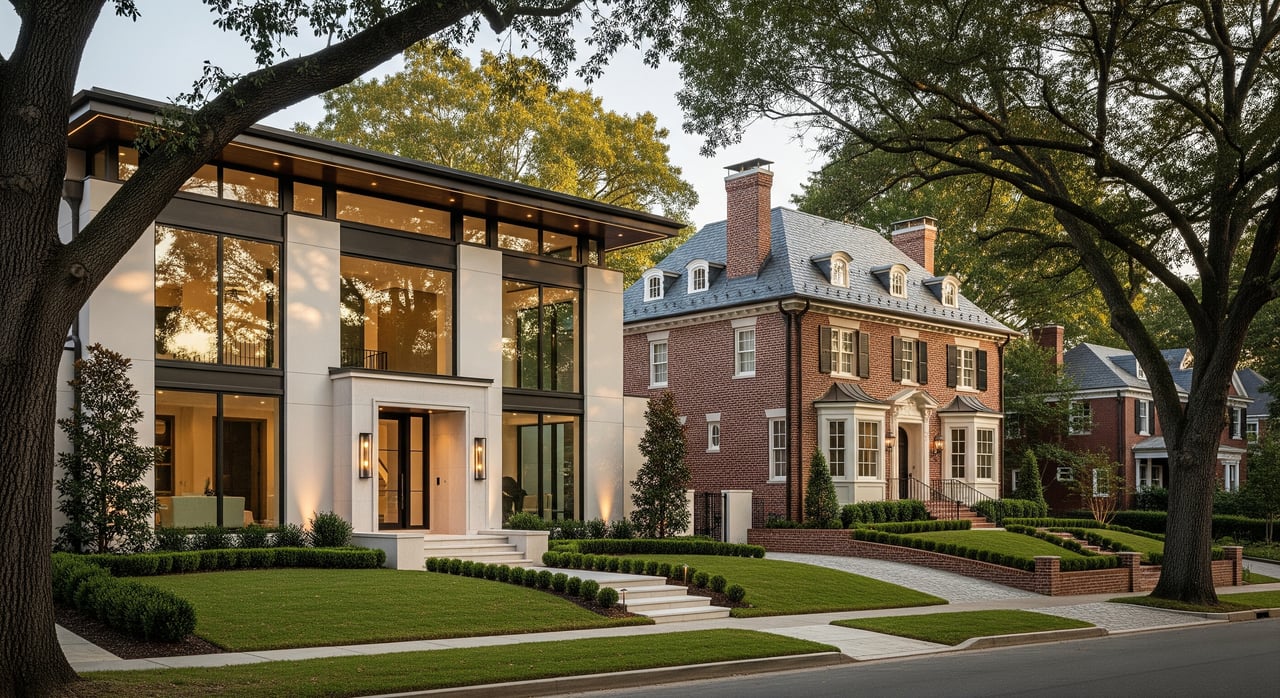
Are you debating between a brand-new custom build and a character-rich resale in one of Charlotte’s established neighborhoods? You’re not alone. Luxury buyers across Mecklenburg weigh lifestyle priorities, budget, timing, and future value before making the call. In this guide, you’ll get a clear, investment-minded comparison of new construction versus resale in Charlotte’s luxury market so you can move forward with confidence. Let’s dive in.
Charlotte luxury at a glance
Charlotte’s luxury demand is supported by steady population and employment growth, with interest centered in established neighborhoods near Uptown and SouthPark, as well as newer master-planned areas in South Charlotte and around Ballantyne. Supply typically splits into two streams: infill and custom rebuilds in core neighborhoods, and larger-lot new construction in suburban communities. You’ll find more resale choices in central areas and more new-build opportunities on the edges and in planned enclaves.
In many central neighborhoods, teardown and rebuild activity continues as buyers seek modern amenities on legacy lots. At the same time, suburban luxury communities offer gated living, club access, and turnkey outdoor spaces. Both paths can be compelling. The right answer comes down to your location priorities, timeline, and appetite for customization.
New construction: what you gain
Price and value
New construction often carries a premium. Beyond the base price, plan for lot premiums, design center selections, and potential overages on finishes and landscaping. If you enter early in a community, pricing can vary by lot position and view. While you may pay more upfront, modern systems and energy features can lower operating costs and appeal to future buyers.
For long-term value, location still matters. A top-tier resale in a highly sought-after neighborhood can match or exceed a new-build price, simply because mature lots and proximity are finite.
Customization and finishes
With a new build, you can align the floor plan and finishes with your lifestyle. You can select materials, built-ins, smart-home systems, and outdoor living. Many luxury builders offer allowances and design studios. Just know that custom upgrades add cost and some selections will be constrained by builder options, lead times, and structural limits.
Time and timeline risks
A finished spec home can close relatively quickly, but a custom project can run 9 to 18 months or more. Expect possible delays from permits, trade schedules, and materials. Factor carrying costs into your plan, including temporary housing, construction loan interest, insurance, taxes, and payments on your current home if you own one.
Quality, inspections, and warranties
Builders usually provide workmanship and structural warranties. Coverage varies, so request details on length, scope, and transferability. You should still hire independent inspectors for pre-drywall, mechanical rough-in, and final walkthrough stages. A strong punch-list process and clear warranty follow-up help protect your investment.
Financing and appraisal
You may use a construction-to-permanent loan or builder-aligned financing. Underwriting for construction loans is often stricter and interest-only during draws is common. Appraisal can be tricky for one-of-a-kind luxury features or large lots when comparable sales are limited. If comps are thin, be prepared for appraisal risk and the possibility of a larger down payment.
Taxes, HOA, and fees
Both new and resale properties are subject to Mecklenburg County taxes. New builds may have a lower initial assessed value that is reassessed after completion. Factor in permits, impact fees, and potential tree or stormwater costs. In suburban luxury communities, HOA dues may cover amenities and common areas. In central areas, you may have fewer fees but you could face design rules, especially in historic districts.
Location, lot, and outdoor living
New construction in suburban enclaves often offers larger lots, modern outdoor kitchens, pools, and thoughtful orientation for light and privacy. Community amenities can be a significant draw. If your priority is brand-new systems with turnkey outdoor spaces, new construction can deliver it in one package.
Resale: what you gain
Price and value
Resale homes may list lower than comparable new builds, but include a budget for updates, system replacements, or renovation. In many central neighborhoods, you’re buying into a location with mature trees, established streetscapes, and strong land value. Over time, location often drives appreciation.
Character, finishes, and scale
Many resales feature distinctive architecture, custom millwork, and mature landscaping you cannot buy off the shelf. If you want to reshape the layout, moving walls or reworking mechanicals can be expensive and sometimes limited by local design rules. If you prefer move-in ready, target homes with recent, high-quality renovations.
Time and certainty
Most resale transactions close in 30 to 60 days, sometimes faster. If you need a predictable timeline or want to avoid months of construction logistics, resale provides clarity. This can also reduce the risk of paying for two homes at once.
Inspections and maintenance
Plan for a complete home inspection and expect to discuss repair or credit requests. Older homes may have near-term replacements for roof, HVAC, windows, or drainage improvements. A realistic maintenance forecast helps you avoid surprises and supports stronger negotiation.
Financing and appraisal
Traditional mortgage products and jumbo loans are common for resales. Established luxury neighborhoods often provide better comparable sales, which can ease appraisal. That said, unique features still require documentation and a thoughtful comp set.
Taxes, HOA, and restrictions
Central resales may have minimal HOA obligations, though some areas include historic or design controls that shape exterior changes. Understand any neighborhood assessments, easements, or encroachments before you commit.
Location and lifestyle
Resales in central neighborhoods offer convenient access to Uptown and SouthPark job centers, retail, dining, and private-school campuses. If a shorter commute and mature streetscapes are priorities, a central resale can be a strong fit.
Quick comparison checklist
- Timeline: New build is months to a year or more, resale is weeks to months.
- Customization: High with new build, more limited with resale unless you renovate.
- Move-in readiness: Often resale, sometimes a finished spec new build.
- Near-term maintenance: Lower with new build, variable with resale.
- Warranties: Usually included in new builds, rare in resales.
- Appraisal risk: Higher for custom new builds, lower when resales have strong comps.
- Carrying costs: Higher risk with new builds due to timeline, lower with resale.
Two buyer scenarios
- You want central walkability and a mature lot. Consider a resale or a teardown and custom rebuild in a core neighborhood. Expect strong land value and potential design controls.
- You want a large lot with new systems and modern outdoor living. Explore custom or semi-custom opportunities in South Charlotte or Ballantyne area communities offering amenities and newer infrastructure.
Due diligence roadmap in Charlotte
For new builds
- Ask what is included in the base price and the average upgrade spend for similar homes.
- Request full warranty details, including coverage length, transferability, and claim process.
- Confirm the superintendent and trade partners, and tour completed homes with recent references.
- Map the build timeline, contingencies for delays, and draw schedule for financing.
- Identify permit, impact, and tree mitigation fees. Clarify who manages final grading and landscaping.
- Schedule independent inspections at pre-drywall, mechanical rough-in, and final.
For resales
- Document the age and service records of roof, HVAC, windows, electrical, and plumbing.
- Ask about neighborhood assessments, easements, encroachments, and HOA changes.
- Review comparable nearby sales, days on market, and reason for the sale.
- Obtain a full inspection and consider specialist evaluations for high-end systems.
For both paths
- Review neighborhood comps and luxury segment time-on-market for your specific subarea.
- Check permit history and tax records with county offices.
- Engage a lender experienced with jumbo and construction-to-perm loans if needed.
- Retain a third-party inspector and consider an energy or HVAC efficiency review.
Negotiation dynamics and incentives
Builders may offer incentives such as closing cost assistance, appliance packages, or rate buydowns, especially on completed spec homes or in softer conditions. Negotiation on upgrades or lot premiums varies by builder and demand. Many builders limit contingencies linked to the sale of your existing home.
Resale sellers often show more flexibility on price, closing credits, or repairs, depending on time on market and competing offers. In multiple-offer situations, a clean offer with strong terms can be more compelling than marginal price differences.
Financing and appraisal watchouts
For new builds, construction loans come with interest-only draws and stricter underwriting. Unique features can outpace comparables, increasing appraisal risk. For resales, established comps help, but luxury upgrades that are unusual still require documentation and a careful narrative for appraisers.
A strong pre-approval and clarity on loan products will strengthen your position. For construction, align your lender, builder, and appraiser early so the valuation approach matches the scope and quality of the home.
Taxes, HOA, and local planning
Mecklenburg County assessments apply to both paths. New builds can see reassessment after completion, so plan for changes. In suburban communities, HOA dues often fund amenities and common maintenance. In central areas, you may have limited or no HOA dues, paired with design rules that protect neighborhood character.
If you plan exterior changes to a resale or a teardown-rebuild, review zoning, tree protection, and any historic district guidelines. These can influence feasibility, cost, and timeline.
How to choose: your 10-question checklist
- Which matters more for you: location and commute or newer systems and space?
- What timeline can you comfortably support, including temporary housing or double payments?
- How much customization do you truly want, and what is the budget for upgrades?
- Are there strong comparable sales to support your target value at closing?
- What is your tolerance for appraisal risk in a custom project?
- Do you prefer mature trees and landscaping or a newly designed outdoor plan from scratch?
- What are the near-term maintenance expectations for the properties you are considering?
- How do HOA dues, amenities, or design controls affect your lifestyle and costs?
- Which financing path fits best, and are you prepared for construction-to-perm requirements if needed?
- If you plan to sell within 5 to 7 years, which option will be more attractive to buyers in your specific submarket?
Putting it together
Both paths can be excellent investments when matched to your goals. If you want turn-key new systems, modern layouts, and curated outdoor living, focus on new construction in South Charlotte and suburban enclaves. If you want a prime address, mature lots, and proximity to Uptown and SouthPark, target high-quality resales or a teardown-to-custom strategy in core neighborhoods.
A disciplined plan will protect your time and capital. Define your non-negotiables, line up financing early, and use expert inspections at every stage. If you want help pressure-testing the numbers, comparing submarkets, or sourcing on-market and private opportunities, connect with Bryn Rose Real Estate for boutique, advisor-led guidance backed by Christie’s global reach.
Ready to refine your strategy and tour the right homes with a data-informed plan? Let’s talk. Connect with the team at Bryn Rose Real Estate for concierge advisory and access across Charlotte and Lake Norman.
FAQs
What holds value better in Charlotte, a new build or a resale in a central neighborhood?
- Location often drives long-term value. A well-located resale in a core neighborhood can match or outperform a new build in a less central area.
How long does a custom luxury build typically take in Mecklenburg County?
- Many custom projects run 9 to 18 months or more, with timeline risk from permits, trades, and materials. A finished spec home can close sooner.
Do I need inspections on new construction if the builder provides a warranty?
- Yes. Independent inspections at pre-drywall, mechanical rough-in, and final walkthrough help verify quality and protect your punch-list and warranty claims.
What financing options should I consider for a high-end new build?
- Construction-to-permanent loans, lot plus construction loans, and builder-aligned programs are common. Underwriting is often stricter with interest-only draws.
How do HOAs differ between central Charlotte resales and suburban luxury communities?
- Suburban luxury HOAs often fund amenities and common areas. Central resales may have limited dues but can be subject to design or historic rules.
What are typical negotiation points with builders versus resale sellers?
- Builders may offer incentives on spec homes and select upgrades, while resale sellers often negotiate on price, repairs, or closing credits depending on market conditions.